Talking Invasive Species at Ecofest
Talking Invasive Species at Ecofest
Did you know that of all invasive species in Australia, plants have the highest reported economic costs? Since the 1960s, invasive species have cost us almost $400 billion[EP1]. This means they are more than an environmental issue; they are also a significant economic and social problem.
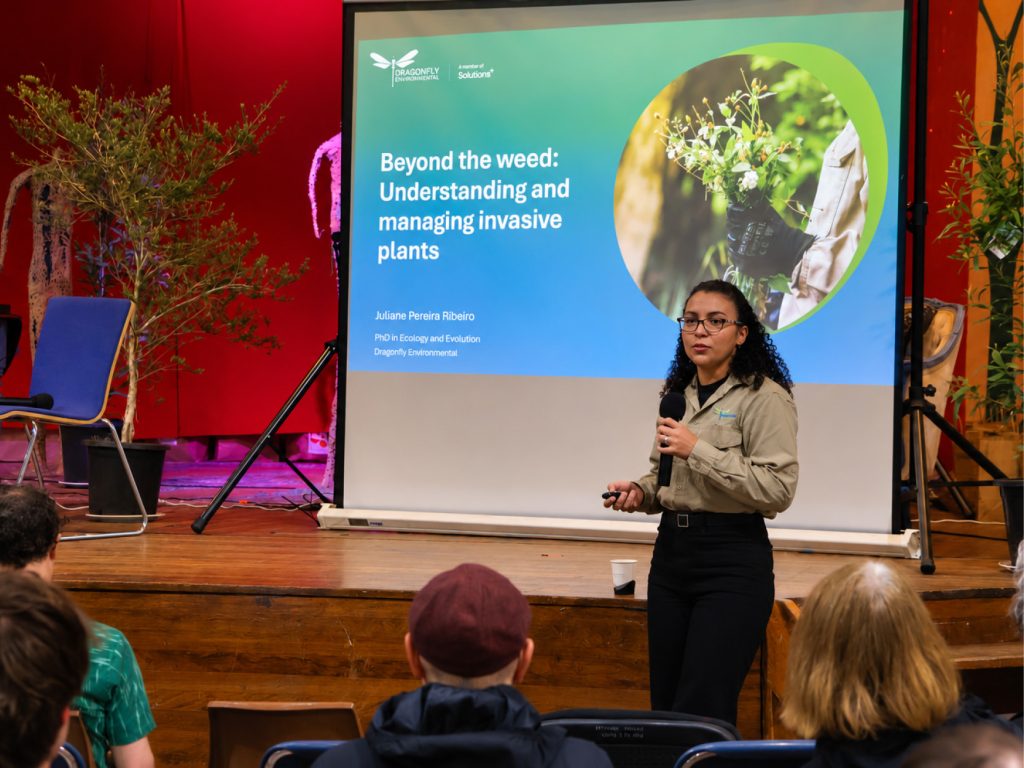
Dragonfly team member, Juliane Ribeiro, had the opportunity to present at EcoFest and talk all things invasive species.
EcoFest was organised by Inner West Council and Addi Road Community Organisation, and explored urban ecology, green spaces, tree canopy, air quality, waterways, weeds, native plant selection, and community roles and responsibilities. The event showcased local efforts, with technical experts and community champions in attendance.
Juliane spoke about invasive plants, specifically how to understand and manage them.
“When we think about invasive plants, we often think about what we can see – a weed dominating an area and replacing native vegetation,” explains Juliane.
But the impact on native plants is just the tip of the iceberg.
“Invasive plants can also change soil conditions, leaf litter, microclimate, water availability, fire regimes and habitat structure. These changes can then affect invertebrates and other wildlife.”
So what can we do?
Juliane says that while removing weeds sounds simple, we need to consider a number of things first.
These considerations include the species, how much is there, what native vegetation is already present, what the site is like, the best control method, and what happens after removal.
“For example, removing all vegetation from an invaded riverbank without considering what happens next could leave bare soil and create erosion or reinvasion problems. Good weed management therefore needs planning and a long-term approach.”
Restoration is an ongoing process
When undertaking a restoration project, the first step is to assess the site and plan the work, then control the invasive plants.
Native vegetation may regenerate naturally, or we may need to plant.
After that, we monitor the site. Are weeds returning? Are native plants establishing?
Based on what we find, follow-up work may be needed, followed by more monitoring.
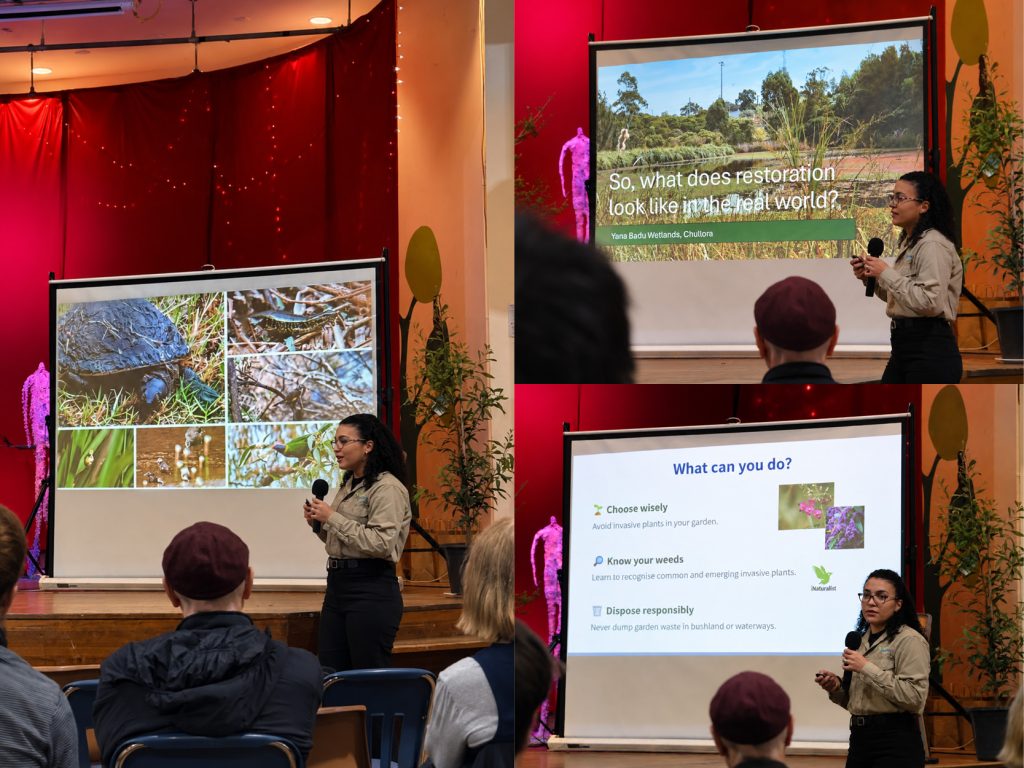
The Yana Badu Wetlands in Chullora is a local example of long-term restoration and collaboration. Part of the upper Cooks River catchment, Dragonfly Environmental started working at Yana Badu in 2019, but its story began long before that, around 30 years ago, in fact. At that time, local environmental groups and community members advocated for creating a wetland as the surrounding area was being developed. Over the years, the site has involved collaboration between community, public and private organisations.
Today, the wetland provides habitat for a variety of wildlife.
During Juliane’s time working there, she has recorded frogs, turtles, birds and mammals using the site. However, even after decades of restoration, weed management is still necessary. Weeds keep arriving, so monitoring and follow-up management continue.
Juliane says that prevention is our best tool
“Managing an established invasion can be complex, expensive and continue for many years, while preventing invasive plants from establishing or spreading is much easier and cheaper,” Juliane explains.
What can you do at home and in your community? Choose garden plants carefully, learn to recognise local weeds, dispose of garden waste responsibly, clean equipment to avoid spreading seeds, get involved with local restoration groups, and share knowledge with others.
While professional weed management and ecological restoration are complex and require long-term work, everyone in the community can play a role in prevention.
About Juliane
Armed with a BSc Biological Sciences, MSc Ecology and Evolution and PhD Ecology and Evolution, Juliane brings to Dragonfly years of experience in scientific research, community engagement, and environmental education.
With a passion for biodiversity conservation and environmental monitoring, Juliane’s expertise includes fauna monitoring (camera trapping, species surveys), spatial ecology, and the impact of climate change on ecosystems. She aims to bridge science and industry, contributing to projects that promote ecological sustainability and help restore and preserve natural landscapes.