Palmgrove Park Avalon
Project
Palmgrove Park Avalon
Our team successfully executed a comprehensive bush regeneration and APZ project for the Northern Beaches Council, while actively protecting habitats for Australia’s largest owl species.
Method & Technique:
- Bush Regeneration
- Asset Protection Zones
- Endangered Ecological Communities
- Endangered Species
Overview
With smoke from the bush fires thickening the air and the devastating news of fires raging through Australia, plans and preparations. The Northern Beaches Council had developed management plans for a number of reserves, including a prescribed ecological burn for Palmgrove Park in Avalon. However, plans had to be adapted following the discovery of two Powerful Owl chicks nesting within the reserve.
The Powerful Owl is Australia’s largest owl species but unfortunately, they are adversely affected by land clearing. These owls typically roost during the day within dense tree and shrub canopies, making the protection of their habitat critical.


Project Objectives and Outcomes
To ensure the safety of the chicks, our team undertook the project with extreme care and consideration, manually removing vegetation and fine fuels to minimise disturbance to the nesting owls.
Ecological burning is carried out to replicate natural fire cycles. Each native vegetation community has specific fire requirements, and controlled burning supports these natural processes by stimulating native plant regeneration, enhancing biodiversity, and assisting in weed management.
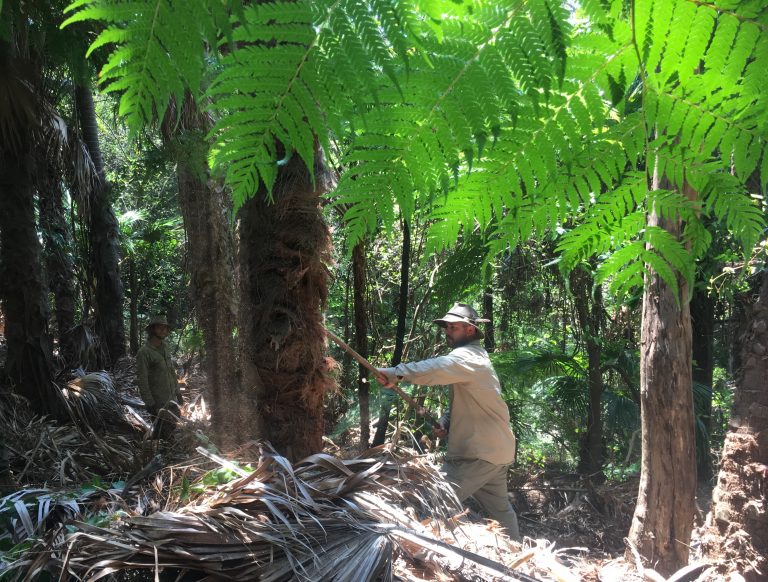

Palmgrove Park contains a significant stand of Cabbage Tree Palms within the Littoral Rainforest (EEC) and Pittwater Wagstaffe Spotted Gum Forest (EEC) ecological communities. The scope of works involved the manual removal of fine fuels and plant material that would otherwise have been burned, reducing fuel loads and helping minimise the spread and intensity of potential bushfires to better protect nearby residents and wildlife.
Works included the removal of mid-storey palm fronds attached to Livistona australis to prevent fire laddering into the canopy. Maintenance activities were also completed within high-resilience areas at the lower section of the reserve, targeting seeding grasses and annual weeds throughout the native ground layer vegetation.
Target species included Bidens pilosa, Solanum nigrum, Sonchus sp., Ehrharta erecta, Poa sp., Conyza sp., Bromus sp., Brisa sp., Gamochaeta sp., and Ageratina riparia.
The project concluded successfully, with the owl chicks remaining safe and undisturbed throughout the works. Perched high above the reserve, they monitored our team, while we worked carefully to ensure the chicks never felt threatened or stressed during the vegetation clearing process.