
Gardens of Stone National Park Bush Regeneration
Working within the Gardens of Stone National Park, we implemented our weed control services to protect native habitats and threatened species. After our treatment…
Working within the Gardens of Stone National Park, we implemented our weed control services to protect native habitats and threatened species. After our treatment…
Working within the Gardens of Stone National Park, we implemented our weed control services to protect native habitats and threatened species. After our treatment of invasive species, the project has transitioned into a careful maintenance phase to support long-term ecosystem health.
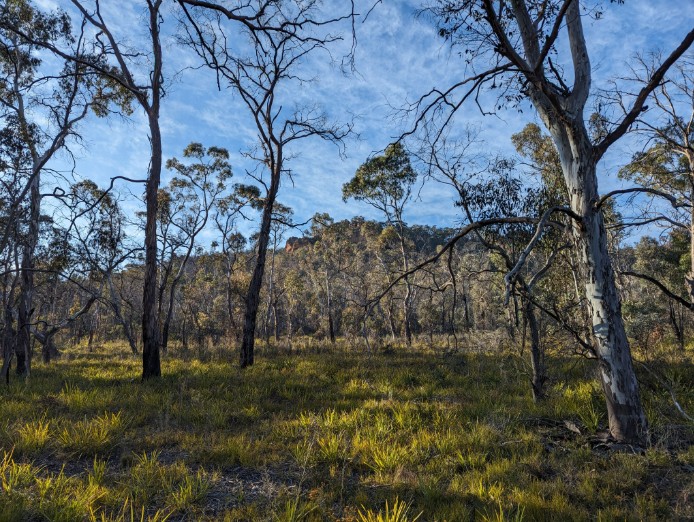
Our team successfully completed the primary weed control program targeting Blackberry (Rubus fruticosus agg.) at Gardens of Stone National Park, an area recognised for its significant birdlife and threatened species habitat. In addition, invasive Monterey Pine (Pinus radiata) was treated using the ringbarking method to prevent further encroachment into native vegetation The work was carried out by our experienced and AQF3 SMARTtrain Chemical Accreditation certified personnel, using appropriate herbicide application methods to ensure effective treatment while taking extra care to minimise impacts on native flora and fauna. We have now entered the maintenance phase, with ongoing, carefully managed follow-up treatments to support the long-term protection of this sensitive ecosystem.
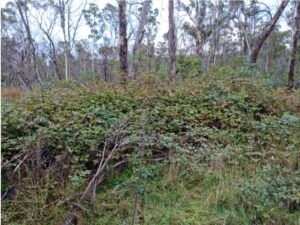 |  |
| Large incursions of Rubus fruticosa | Large incursions of Rubus fruticosa |
 | 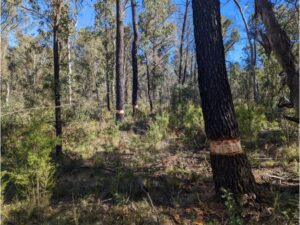 |
Pinus radiata ring Barked with chainsaws | Afte photo of Ring Bark treatment |
Over multiple years, we restored key wetland habitats within the Sydney Airport precinct, balancing ecological rehabilitation with aviation safety requirements. Through our weed management…
Over multiple years, we restored key wetland habitats within the Sydney Airport precinct, balancing ecological rehabilitation with aviation safety requirements. Through our weed management services, we transform degraded areas into strong ecosystems.
We successfully completed a multi-year bush and wetland regeneration project for our client, Sydney Airport, spanning from 2019 to 2022. The project began with a focus on intensive primary works to control dense infestations of invasive species such as Cestrum parqui (Green Cestrum), Lantana camara, Chrysanthemoides monilifera subsp. rotundata (Bitou Bush), Ludwigia peruviana (Water Primrose), and various exotic climbers. These weeds were treated in staged sections to support effective restoration and site recovery.
Sydney Airport’s vision was to rehabilitate the riparian habitat around two wetland ponds, creating a functional and resilient natural area while minimising the risk of attracting large bird populations near the airport. Our team worked to achieve this balance by restoring native vegetation and managing habitat complexity appropriately.
From 2020 to 2022, we carried out regular maintenance works to consolidate earlier progress. Weed densities were effectively maintained or reduced across most work zones, with major improvements noted in Engine Pond West, Engine Pond East , and Mill Stream . Native vegetation showed strong regeneration, supported by our follow-up work and favorable seasonal rainfall.
In 2022, the final year of the contract, our efforts shifted to controlling vine and herbaceous weeds such as Rumex sagittatus and Anredera cordifolia, particularly in areas with good native cover or previous plantings. We also carried out supplementary planting to increase biodiversity, enhance habitat corridors, and reduce future weed re-establishment in cleared zones.
Throughout the project, a diverse range of native fauna were observed, including Striped Marsh Frogs, Eastern Water Skinks, Blue-tongued Skinks, Black Swans, Pelicans, Honeyeaters, Swamp Hens, and Superb Fairy-wrens — highlighting the ecological value of this urban stepping stone habitat.
This project was completed to a high standard, with all objectives met through careful planning, consistent follow-up, and strong teamwork. It stands as a successful example of large-scale ecological restoration in a complex urban setting.
 |  |
| Before | After |
 |  |
| Before | After |
Our project at the Upper Ponds Creek spans over nine different sites, we utilised many of our services to enhance both the environmental health…
Our project at the Upper Ponds Creek spans over nine different sites, we utilised many of our services to enhance both the environmental health and community resources along the Upper Ponds Creek entrance. We are proud to continue to work on projects where we can tailor ecological solutions to diverse landscapes.
Services:
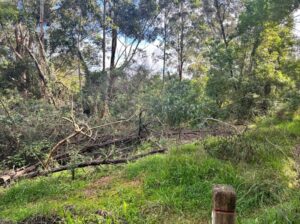
The Upper Ponds Creek project showcased our team’s ability to apply a broad range of ecological techniques and knowledge to deliver successful outcomes across nine diverse sites. This large-scale restoration effort required a tailored approach at each location, with focused strategies including track maintenance, edge weed control, resilient area management, and the preservation of regenerating zones—particularly through the protection of native shrubs and trees from invasive vines. Our work also enhanced the visual amenity of the area, with diligent weed control improving the outlook for visitors at key vantage points. We successfully maintained previously revegetated areas, executed primary and targeted weeding, and carried out routine maintenance to ensure long-term resilience. The effective management of the Hazard Reduction Zone (HRZ) further supported site safety and ecological balance. By combining expertise, industry-standard practices, and a commitment to ecological integrity, we’ve not only achieved the project’s objectives but also contributed to the lasting health and appeal of the Upper Ponds Creek landscape.
 |  |
| Before | After |
 |  |
| Before | After |
Our team’s experience in enhancing reserves like the Field of Mars Reserve, where we were able to execute focused maintenance during wet weather conditions…
Our team’s experience in enhancing reserves like the Field of Mars Reserve, where we were able to execute focused maintenance during wet weather conditions shows our dedication to enhancing ecosystems despite challenges.
Services:
Our team has made strong progress in preserving and enhancing the Field of Mars Reserve throughout the 2022–2024 contract period. Despite challenges such as persistent rain—particularly in spring and summer(2023-2024)—that fueled rapid weed growth, we remained focused on intensive maintenance across key areas including creeklines, drainage lines, resilient bushland, and walking tracks. With the conditions favouring the spread of herbaceous, vine, and grass weeds, we prioritised responsive maintenance over primary works, tailoring our strategies to the unique needs of each zone across Field of Mars North, South, and Entrance. This flexible, targeted approach has helped control invasive species, supported native regeneration, and safeguarded the ecological integrity of the reserve. As we look ahead, our team remains committed to adapting and refining our efforts to ensure the long-term health and vibrancy of this vital natural space for both wildlife and the community.
 |  |
| Before (Field of Mards Entrance) | After |
 |  |
| Before (Field of Mards Norh) | After |
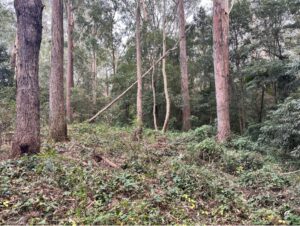
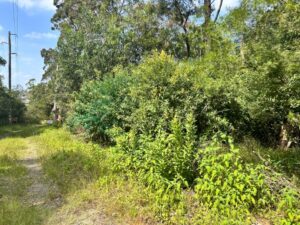 |  |
| Before (Field of Mards South) | After |
 | 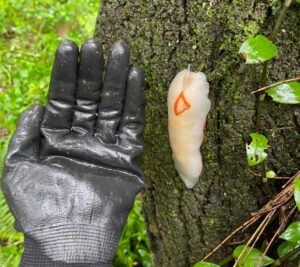 |
Red Triangle Slug |
Our team delivered Bush Regeneration and Revegetation services at Dee Why Dunes which spanned over 11 hectares. Our work here used targeted and innovative…
Our team delivered Bush Regeneration and Revegetation services at Dee Why Dunes which spanned over 11 hectares. Our work here used targeted and innovative techniques that produced effective results.
Project Outcomes:
Our team delivered Stage 2 bush regeneration works at Dee Why Dunes between January and June 2024 under Northern Beaches Council Bush Regeneration contract 2023. This project, covered approximately 11.32 ha across three zones that was on the foundations of the Year 1 grant and complemented ongoing operational regeneration efforts. Our focus was on controlling invasive species and restoring the native dune ecosystem through a combination of innovative and targeted techniques.
A major achievement was the effective management of Ipomoea cairica using a shredding technique within Ficinia nodosa, which allowed access to mature vine bases with minimal herbicide use. This method has proven successful and will inform future control strategies. Our team also conducted extensive preparation and planting in key areas, including the zone north of the overflow carpark and the bay near the toilet block. Invasive species like Pennisetum clandestinum and Asparagus aethiopicus were treated using hand removal, shredding, and spot-spraying.
New plantings of native species, including Banksia integrifolia and native ground covers, have supported erosion control and improved biodiversity. Weed density ratings improved noticeably. These results included an increase from ‘fair’ to ‘good’ in the southern dune zone, and ‘poor’ to ‘fair’ along the lagoon edge. These results highlight the effectiveness of our targeted approach. Moving forward, continued management of Ipomoea cairica, regular site maintenance, and strategic planting will be essential to further enhance the site’s ecological resilience.
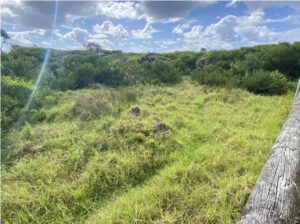 | 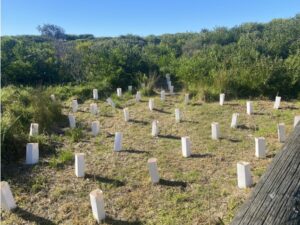 |
| Before | After |
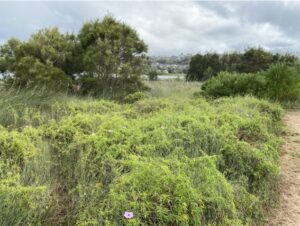 | 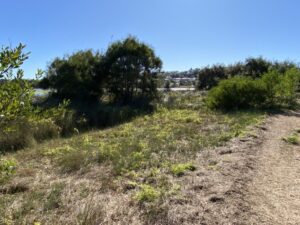 |
| Before | After |
Through targeted bush regeneration and revegetation services at Elizabeth MacArthur EM3, our team established 14,000m² of native vegetation. Project Details: Our team worked on…
Through targeted bush regeneration and revegetation services at Elizabeth MacArthur EM3, our team established 14,000m² of native vegetation.
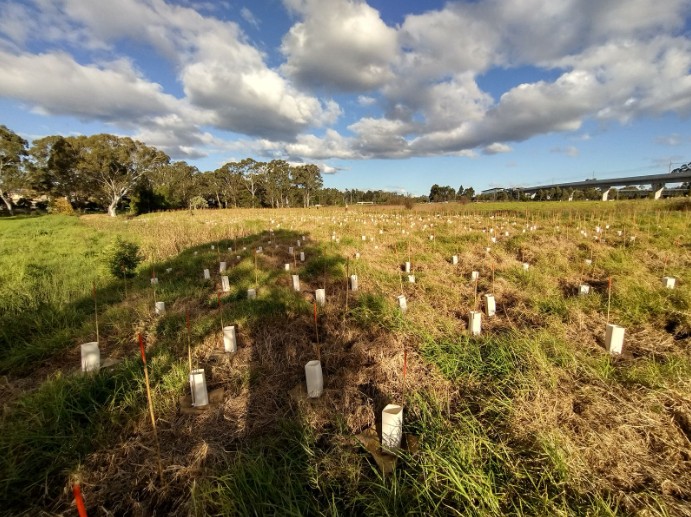
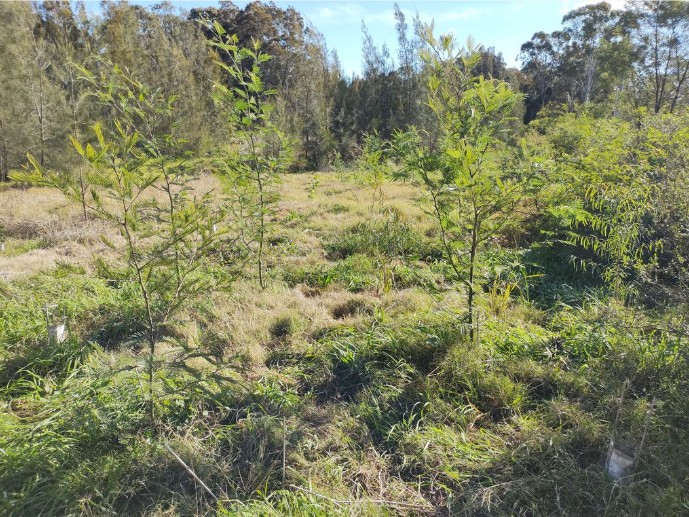
Our team worked on the Elizabeth MacArthur EM3 planting site and successfully established approximately 14,000m² of native vegetation, primarily canopy species. This result will provide valuable habitat and a movement corridor for native fauna.
Our team carried out effective weed management as part of our bush regeneration work and implemented planting efforts to enhance native vegetation. The site now includes around 1,000 canopy trees, 400 shrubs, and 300 ground covers.
 |  |
| Before | After |
 |  |
| Before | After |